Things to do in Cancún beyond the beach: cenotes, Isla Mujeres and Chichén Itzá

Cancún is famous for its beaches, but staying on the sun lounger means missing much of what the Yucatán Peninsula has to offer. Just minutes or a few hours from your hotel there are islands, cenotes for swimming in fresh water, Mayan cities and colonial towns.
In this guide we list the excursions most worth doing, with approximate times and tips for organizing them. If you’re still planning your trip, take a look at our Cancún packages from Uruguay: they include flights, transfers and hotel, and from there you add the excursions you want.
Isla Mujeres: the easiest getaway
Isla Mujeres lies opposite Cancún and you get there by ferry from Puerto Juárez or from some piers in the Hotel Zone. The crossing takes less than an hour, depending on the port and the boat, and there are frequent departures throughout the day.
What to do on the island
- Playa Norte: shallow, very calm water, ideal for kids and for spending hours in the sea.
- Punta Sur: the southern tip of the island, with cliffs and wide-open views of the Caribbean.
- Get around by golf cart: it’s the most common way to move around; you can rent them near the pier.
- Snorkeling: there are boat trips to nearby reefs.
If you go on your own, bring cash in pesos for the cart rental and food, and sunscreen: there’s little natural shade at Playa Norte. You can also go by ferry or on a catamaran tour, which usually includes snorkeling and lunch. For a relaxed day, it’s enough to go early and come back in the afternoon.
Chichén Itzá: the classic excursion into Mayan culture
Chichén Itzá is one of the most important Mayan cities, a UNESCO World Heritage Site. Its main pyramid, El Castillo or the Temple of Kukulcán, is the best-known image of the peninsula.
How to get there
It’s about 200 km from Cancún, in the state of Yucatán. By car or tour bus it takes about two and a half hours on the highway. That’s why the visit takes up the whole day: you leave early and come back at night.
Tips for your visit
- Arrive early: the heat and the crowds increase from midday on.
- Bring a hat, sunscreen, water and comfortable shoes; there’s little shade.
- You can’t climb the main pyramid.
- Many tours combine Chichén Itzá with a cenote and Valladolid, which makes better use of the trip.
Cenotes: swimming in fresh water beneath the jungle
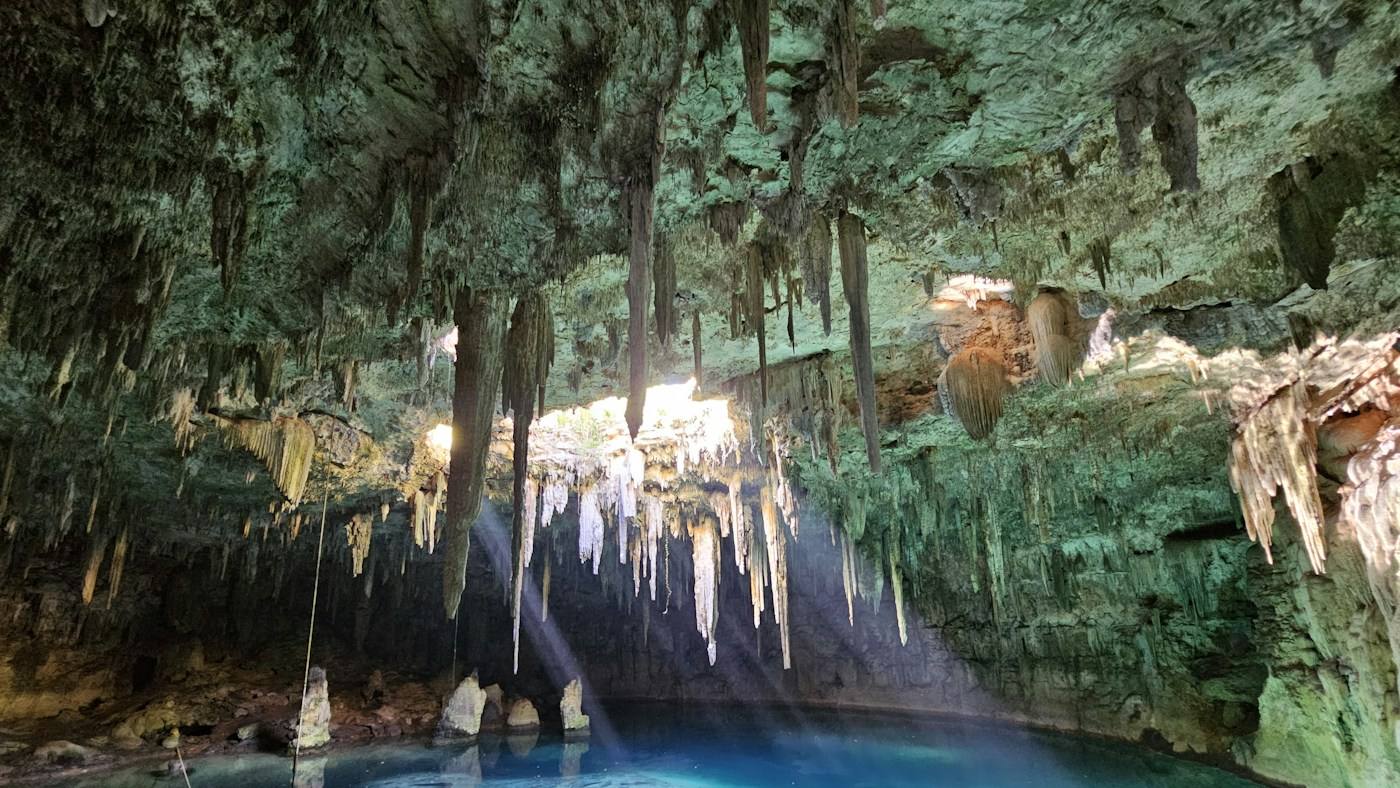
Cenotes are natural freshwater sinkholes formed when the limestone ground collapses. There are open, semi-open and cave cenotes, and swimming in them is one of the most unique experiences in the region.
Types of cenote
- Open: they look like lagoons surrounded by vegetation, with plenty of light. They’re the easiest to visit with kids.
- Semi-open: part of the rock ceiling remains, with an opening that lets in the sun and lights up the water.
- Cave: they’re underground, with stalactites and very clear water. They’re usually explored with a guide, and some only with diving gear.
Where to find them
- Ruta de los Cenotes (Puerto Morelos): a road about 30 to 40 minutes south of Cancún with several cenotes you can combine in one morning.
- Valladolid and Chichén Itzá area: cenotes such as Ik Kil, Suytún or those of Dzitnup, which can be added to the day trip.
- Tulum area: cenotes with very clear water, closer if you’re staying in Playa del Carmen.
What to bring
- Swimsuit and towel. Many cenotes ask you to shower before going in.
- Biodegradable sunscreen or, better, no sunscreen before getting in the water: several cenotes don’t allow it.
- Shoes that can get wet, because some of the ways down are rocky.
- Cash in Mexican pesos, in case the cenote doesn’t accept cards.
Valladolid and the towns of Yucatán
Valladolid is a colonial town about 40 km from Chichén Itzá, with streets of colorful houses, a central square and the San Bernardino convent. It’s a regular stop on tours and well worth walking around, even for a little while.
If you’re interested in Mayan history, another option is Ek Balam, a smaller, less crowded archaeological site, also near Valladolid.
Other activities without leaving Cancún
- Underwater Museum of Art (MUSA): submerged sculptures you can see while snorkeling or diving.
- El Rey archaeological zone: a small Mayan site right inside the Hotel Zone.
- Nichupté Lagoon: boat or kayak trips through the mangroves.
- Theme parks: Xcaret, Xel-Há, Xplor and others, located toward Playa del Carmen, with transfers from Cancún.
- Holbox: a more rustic island to the northwest, for those with more days who want a one- or two-night getaway.
How to organize your excursions
- Don’t fill every day: alternate an excursion day with a rest day at the hotel. Chichén Itzá, for example, is a long day.
- Book the most popular excursions in advance, especially in high season.
- Choose your base wisely: from Cancún, Isla Mujeres and Chichén Itzá are closer; from Playa del Carmen, Cozumel, Tulum and the parks.
- Check the weather: June to November is hurricane season, and boat trips may be canceled if the sea is rough.
Frequently asked questions
Can you visit Chichén Itzá and return the same day from Cancún?
Yes. It’s about two and a half hours each way, so it’s a full-day excursion. Most tours leave early and return at night.
How long does the ferry from Cancún to Isla Mujeres take?
Less than an hour, depending on the departure pier and the type of boat. There are frequent departures throughout the day from Puerto Juárez and the Hotel Zone.
Do you need to know how to swim to go into a cenote?
It helps, because many are deep. Even so, most rent life jackets, and in several they’re mandatory.
Cancún is a great base for combining beach with history and nature. At Planet Travel we put your trip together with flights, transfers and hotel so all you have to do is choose which excursions to add. You can see our Mexico packages and get in touch.