Maragogi or Garopaba: natural pools in the northeast vs. laid-back beaches in the south

If you are thinking about Brazilian beaches but can’t decide between the northeast and staying in the south, comparing Maragogi and Garopaba sums up both options nicely. One is the postcard of turquoise water and natural pools in Alagoas; the other, a surf and nature town in Santa Catarina, much closer to Uruguay.
They are very different trips in terms of weather, distance, time budget and type of vacation. In this article we tell you what each one offers so you can choose with confidence. And if you want to see options right away, we have Brazil packages from Uruguay for both destinations.
Maragogi in a nutshell
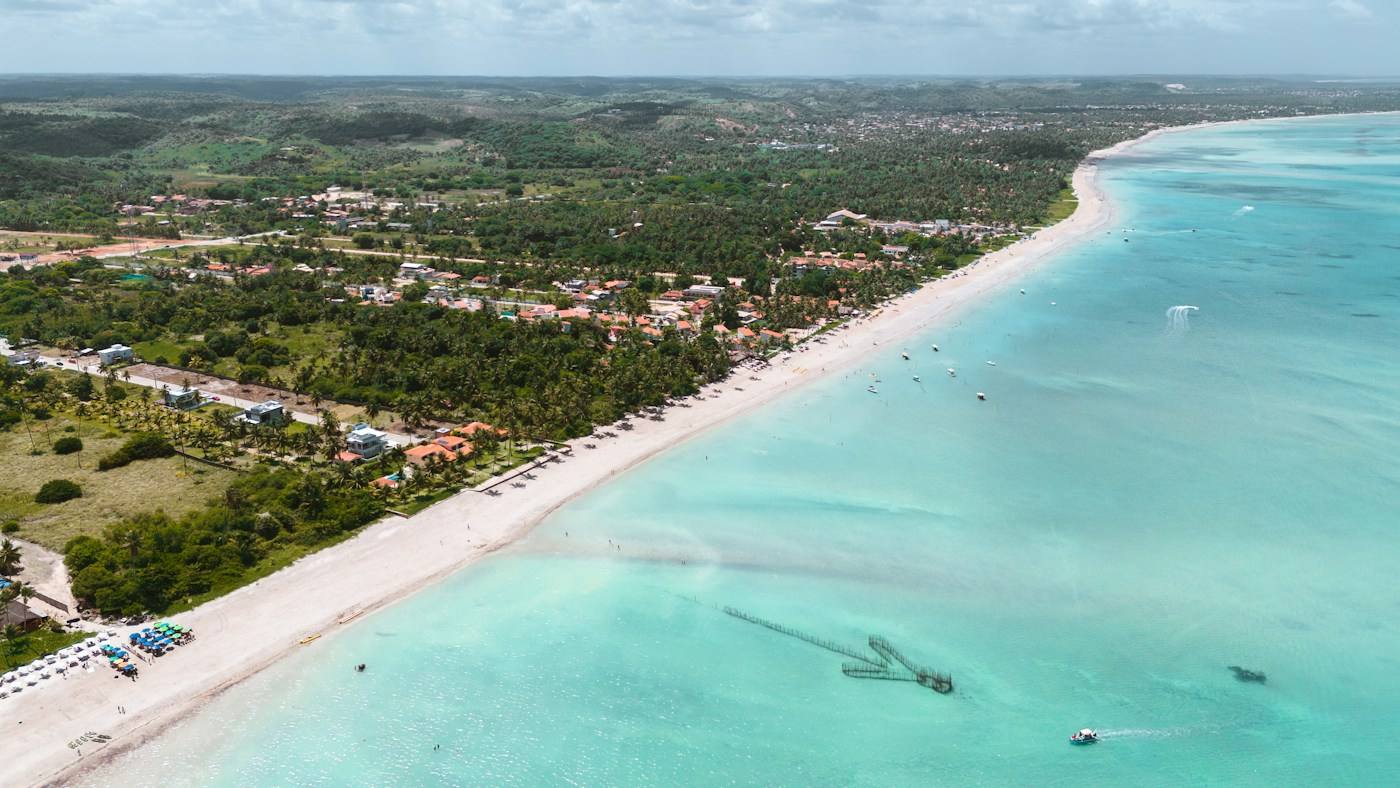
Maragogi is on the northern coast of Alagoas, about 125 km from Maceió and about 130 km from Recife, which means a two- to three-hour road transfer from either airport. It is famous for its warm sea in shades of green and light blue, protected by coral reefs.
The Galés and the natural pools
The big attraction is the Galés de Maragogi: natural pools that form over the reefs, about 6 km off the coast, when the tide goes out. You get there by speedboat or catamaran and snorkel among colorful fish in clear, warm water.
The key point: the trip depends on the tide table. Departures are scheduled around low tide, so it is a good idea to check the times as soon as you arrive and plan the rest of your days around them.
Other beaches in the area
- Praia de Antunes: calm sea and the so-called “Caminho de Moisés”, a sandbar that appears at low tide.
- Barra Grande: calm, shallow water, good for families.
- Taocas and Ponta de Mangue: quieter beaches with their own natural pools.
Garopaba in a nutshell
Garopaba is a coastal town in Santa Catarina, about 70 to 90 km south of Florianópolis depending on the route. It combines a historic fishing village center with open-sea beaches, dunes, hills and lagoons. The atmosphere is laid-back, with lots of surfing and outdoor life.
Main beaches
- Praia Central: in front of the town, with calmer water and fishing boats. Ideal for families.
- Silveira: one of the most beautiful, surrounded by hills and known for its waves.
- Ferrugem: the young crowd’s beach, with surfing by day and nightlife in high season.
- Siriú: famous for its dunes, where people go sandboarding.
- Gamboa: wide and peaceful, with a lagoon close to the sea.
Very close by is Praia do Rosa, in the neighboring municipality of Imbituba, another of the best-known beaches in the region and easy to combine on the same trip.
Southern right whales
Garopaba is part of the viewing area for the southern right whale, which comes to the Santa Catarina coast to breed between July and November, with peak sightings around September. They can often be seen from the shore.
Maragogi vs. Garopaba: head-to-head
Weather and water
- Maragogi: tropical climate, heat all year round and warm water. The rainiest season is usually between April and July.
- Garopaba: subtropical climate. The water is colder than in the northeast and the main beach season runs from December to March.
Getting there
- Maragogi: fly to Maceió or Recife and then transfer by road. It is the option for those who have fewer days and want to make the most of them.
- Garopaba: you can go by bus from Montevideo, ideal for traveling with more luggage and no airports.
Type of trip
- Maragogi: relaxation, snorkeling, resorts and boat trips. Great for couples and families who want calm, warm water.
- Garopaba: surfing, hiking, dunes and a small-town feel. Ideal for groups of friends, active couples and nature lovers.
Which one to choose based on what you want
- You want Caribbean-style water and guaranteed heat: Maragogi.
- You are traveling outside summer: Maragogi, because it stays hot all year round.
- You prefer going by bus and avoiding airports: Garopaba.
- You like surfing or walking from beach to beach: Garopaba.
- You want to see whales: Garopaba in winter or spring.
- You are traveling with little kids: both work; in Maragogi the sea is warmer, and in Garopaba Praia Central is the calmest.
How many days to stay
In Maragogi, we recommend staying at least five or six nights. That gives you room to do the Galés trip on the day with the best tide, explore the nearby beaches and, if you like, add an excursion to other spots on the Alagoas or Pernambuco coast without rushing.
In Garopaba, since the bus trip itself takes time, a one-week stay makes it worthwhile. With those days you can explore the main beaches, go on a hike through the hills, visit Praia do Rosa and enjoy the town at a relaxed pace, without having to choose one thing over another.
Tips for each destination
Maragogi
- Check the tide table before booking the Galés trip.
- Bring water-resistant sunscreen and a rash guard for snorkeling.
- Wear water shoes to walk on the reefs, and don’t step on them in protected areas.
Garopaba
- Bring a jacket: the nights can be cool even in summer.
- Respect the lifeguards’ flags, especially on beaches with waves.
- If you are going for the whales, bring binoculars and ask about the recommended viewpoints.
Frequently asked questions
When is the best time to go to Maragogi?
Between September and March there is usually less rain and more sun. Even so, the weather is warm all year round, and the most important thing is to plan the outings around low tide.
Can you get to Garopaba by bus from Montevideo?
Yes. It is a long road trip, with a border crossing at Chuy, and it is one of the departures we organize by semi-sleeper bus with a tour leader.
When can you see whales in Garopaba?
The southern right whale reaches the Santa Catarina coast between July and November, with the most sightings around September.
Whether you fly to the northeast or take the bus south, you can see the Brazil packages and choose the destination that best fits your vacation.