

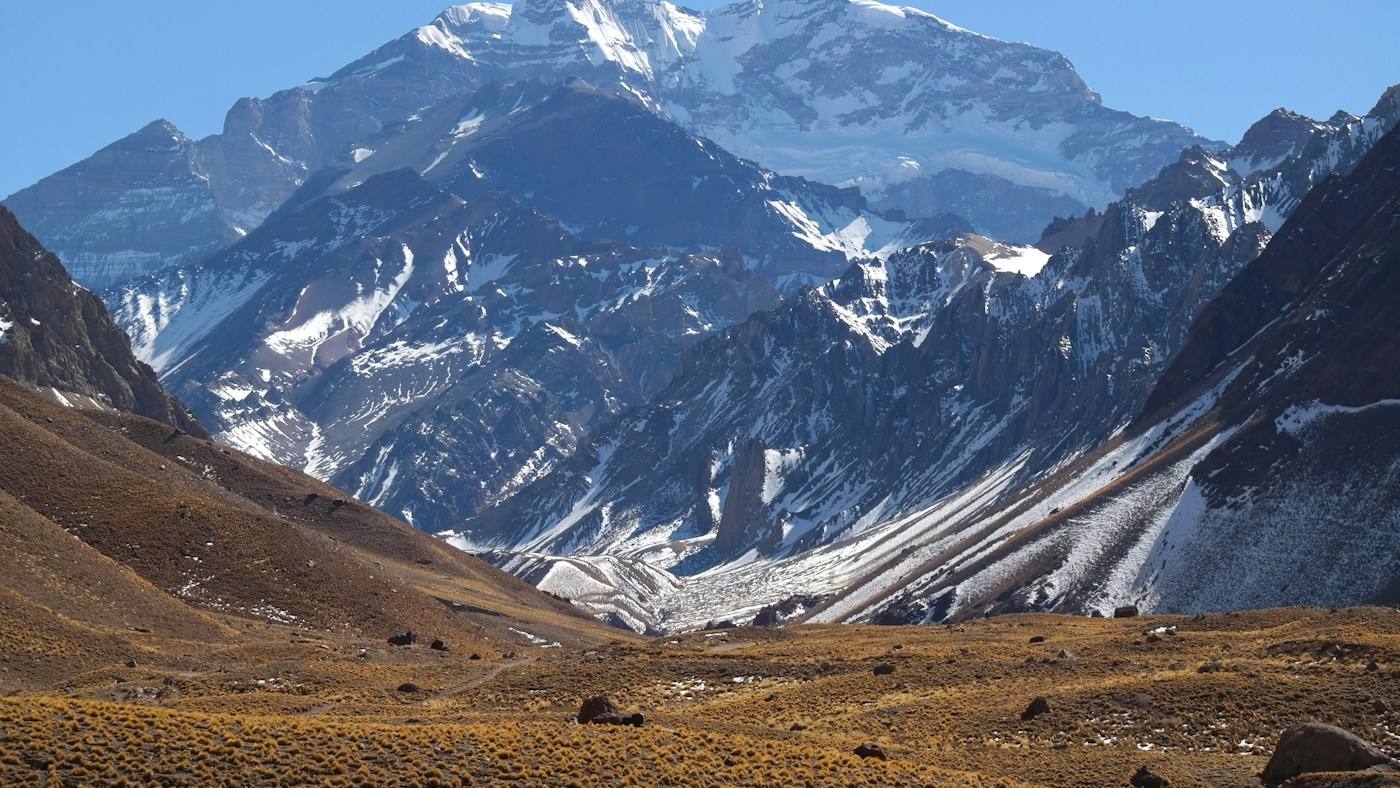

A week in Mendoza is enough to combine the two sides of the province: the vineyards on the plains, with wineries half an hour from downtown, and the Alta Montaña (High Andes), where Ruta 7 climbs into the mountains until Aconcagua stands right in front of you. The key is to order your days so you don’t spend the whole week in a car and to schedule the mountains at just the right moment.
If you would rather not arrange transfers, tours or bookings on your own, at Planet Travel we have Mendoza packages from Uruguay, including group departures by bus with a guide leaving from Uruguay. If you are going independently, this guide will still help you plan your route.
Below you will find a seven-day itinerary, what to do in each area and some tips to make the most of your week.
How to plan the week
Mendoza city works well as a base for your entire stay. From there you can quickly reach Maipú and Luján de Cuyo, and in a full day you can do the Alta Montaña or the Uco Valley. An order that works:
- Day 1: arrival and a tour of the city.
- Day 2: Maipú wineries.
- Day 3: Luján de Cuyo wineries.
- Day 4: Alta Montaña: Potrerillos, Uspallata, Puente del Inca and Aconcagua.
- Day 5: Uco Valley.
- Day 6: free day or an adventure activity (rafting, horseback riding, hot springs).
- Day 7: shopping, a last lunch and the trip home.
It is best to put the Alta Montaña in the middle of the week: if the weather closes the road that day, you still have room to move it to another day.
Day 1: Mendoza city
The city is easy to explore on foot. The irrigation channels (acequias) running alongside the sidewalks and the tree-lined streets provide shade even in the height of summer. Some spots for your first day:
- Plaza Independencia and the four squares surrounding it, each with its own style.
- Parque General San Martín, a huge park with a lake and Cerro de la Gloria, which offers views over the city.
- Calle Aristides Villanueva for dinner or drinks in the evening.
Keep in mind that the siesta tradition is still alive in Mendoza: many shops close in the early afternoon and reopen later, so plan your shopping around that.
Days 2, 3 and 5: wineries in three different areas
Visiting the three main wine regions on separate days lets you compare styles without overdoing it. We recommend no more than two or three wineries a day, with lunch at one of them.
Maipú
It is very close to downtown and the most practical area for a first day of wine. It has traditional wineries, olive oil factories and the option of touring the circuit by bike, since several wineries are just a few minutes from each other.
Luján de Cuyo
Known as the cradle of Malbec, it is home to many of the province’s best-known wineries. It is about 20 to 30 minutes by car from the city and ideal for a long lunch with wine pairing.
Uco Valley
It is the most remote and the highest area, with vineyards that in some spots sit more than 1,000 meters above sea level and the Andes as a backdrop. It takes a full day, so it is best to leave it for when you have already settled into the rhythm of the trip. If you want to dig deeper into the differences between the three areas, we have a dedicated guide to the Mendoza wine route.
Day 4: Alta Montaña and Aconcagua
It is the longest excursion of the week and the most striking. It follows National Route 7, the road leading to the pass into Chile, and you leave early because the round trip takes many hours.
Stops along the way
- Potrerillos Dam: the first big landscape, with the reservoir surrounded by hills.
- Uspallata: a wide valley where people usually stop for lunch or a drink.
- Puente del Inca: a natural bridge over the Las Cuevas River, at about 2,700 meters, with colorful sediment formed by hot springs.
- Aconcagua Provincial Park: the Horcones entrance is about 185 km from the city, at almost 2,950 meters. From there a short trail leads to Laguna de Horcones, with a direct view of the mountain.
Aconcagua
At around 6,960 meters, it is the highest mountain in the Americas. You don’t need to be a mountaineer to see it: the lagoon trail is short, takes about an hour at an easy pace and requires no experience. What you do need to consider is the altitude: walk slowly, drink water and bring warm clothes even if it is hot in the city.
If you travel in winter
Between June and September, snowfall can close the road. It is common to only be able to reach Puente del Inca, or for the pass into Chile to be closed for several days. Snow chains are mandatory in the high mountain area, so if you rent a car, ask about them. On an organized tour, the agency takes care of checking the road conditions.
Day 6: adventure or rest
After several days of wineries and road trips, on the sixth day you can choose based on your energy:
- Rafting on the Mendoza River, in the Potrerillos area, with sections for beginners.
- Horseback rides through the Andean foothills.
- Cacheuta hot springs, a good option to rest your legs.
When to go to Mendoza
Mendoza can be visited all year round, but each season changes the experience:
- Fall (March to May): grape harvest season, with the vineyards changing color. The harvest runs roughly from late February to April, and the National Grape Harvest Festival (Fiesta Nacional de la Vendimia) is held in early March. It is high season: book well in advance.
- Spring (September to November): mild weather, ideal for outdoor lunches at the wineries.
- Summer: hot, dry days; the wineries and the mountains are a good escape.
- Winter: snowy landscapes in the Andes, with the risk of closures on Ruta 7.
Practical tips
- Book wineries in advance: most work by appointment, especially for lunches and tastings.
- Don’t drive after tastings: if you are going by car, choose a designated driver or book transfers.
- Bring sunscreen and water: the climate is dry and the sun is strong, especially at altitude.
- Dress in layers: the temperature difference between day and night is big, and it is cold in the mountains even in summer.
If you want to enjoy this week without worrying about transfers or bookings, you can see the Argentina packages and choose the one that best fits your dates and the way you travel.
Frequently asked questions
How many days do you need to see Mendoza?
In five days you can see the highlights, but a week lets you visit all three wine regions, do the Alta Montaña and have a free day without rushing.
Can you see Aconcagua without trekking?
Yes. From the Horcones entrance of Aconcagua Provincial Park there is a short, easy trail to a lagoon with a direct view of the mountain.
What is the best time to visit the wineries?
The grape harvest, from late February to April, is the most festive time. Spring is quieter and has ideal weather for lunch outdoors.

