

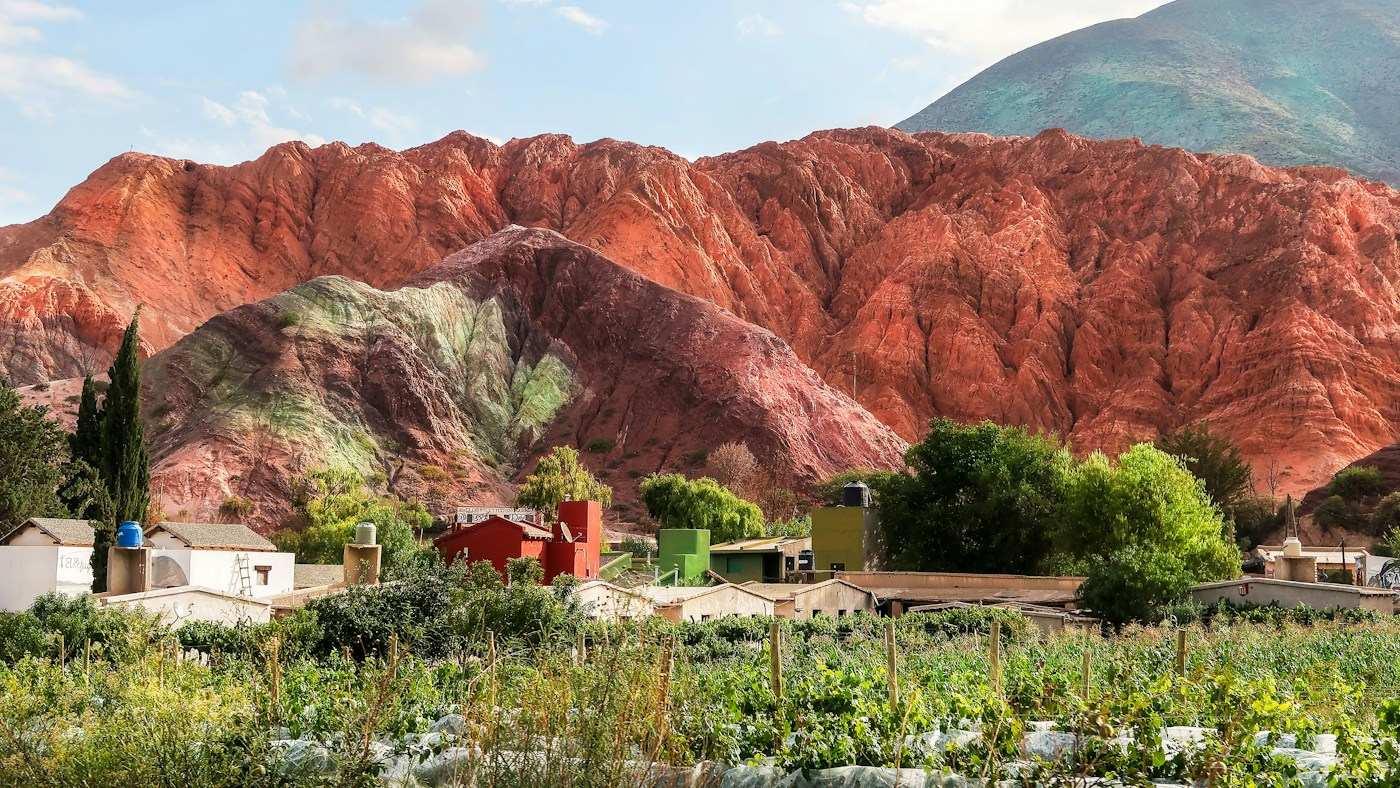
Northern Argentina: a route through Salta, Purmamarca, Humahuaca and the Salinas Grandes

Northern Argentina is one of the trips that surprises Uruguayan travelers the most: multicolored hills, adobe villages, the silence of the Puna and a white salt flat that seems to go on forever. The classic route links the city of Salta with the Quebrada de Humahuaca, in Jujuy, and the Salinas Grandes, and you can do it comfortably in about six or seven days.
If you’d rather travel with everything arranged, at Planet Travel we have Northern Argentina packages from Uruguay, with group departures by bus and a guide from Uruguay. In this article we explain how to plan the route, what to see at each stop and how to handle the altitude.
A possible seven-day itinerary
- Day 1: arrival in Salta and a walk around the city center.
- Day 2: Salta: museums, Cerro San Bernardo and folk music venues (peñas).
- Day 3: transfer to Purmamarca, in the Quebrada de Humahuaca.
- Day 4: Salinas Grandes via the Cuesta de Lipán.
- Day 5: Tilcara and Humahuaca.
- Day 6: Serranía de Hornocal or a quiet day in the Quebrada.
- Day 7: return to Salta or to San Salvador de Jujuy.
The order isn’t random: you climb gradually. Salta sits at about 1,200 meters, the Quebrada at over 2,000 and the Salinas above 3,400. That progression helps your body get used to the altitude.
Salta: the gateway
Salta is the ideal base to start from. It has good connections, plenty of accommodation and a colonial center you can explore on foot.
What to see in Salta
- Plaza 9 de Julio: surrounded by the Cathedral and the Cabildo, it’s the starting point for any walk around town.
- San Francisco Church: one of the most photographed façades in the city.
- Museum of High Mountain Archaeology (MAAM): displays finds from the Llullaillaco volcano and explains Inca culture in the region.
- Cerro San Bernardo: you can go up by cable car or by the steps and get a full view of the city.
- Folk music peñas: at night, empanadas, locro and live music.
Purmamarca and the Hill of Seven Colors
Purmamarca is about 180 to 190 km from Salta, already in the province of Jujuy, at the entrance to the Quebrada de Humahuaca. It’s a small village with adobe houses and a craft market on the main square, at an altitude of over 2,000 meters.
What to do in Purmamarca
- See the Cerro de los Siete Colores: the best light is early in the morning, when the sun hits the colored layers head-on.
- Walk the Paseo de los Colorados: a short loop around reddish hills that you can do on foot in little time.
- Browse the market: llama wool textiles, pottery and local crafts.
Spending the night in Purmamarca is a good idea: it keeps you close to the Salinas for the next day and lets you spend a night at altitude before climbing higher.
Salinas Grandes via the Cuesta de Lipán
From Purmamarca, the Salinas Grandes are about 65 km away along National Route 52. The drive is part of the excursion: the Cuesta de Lipán climbs in tight hairpin bends up to a high point of around 4,170 meters, with views of the Quebrada that change at every turn.
What to expect at the Salinas
The salt flat lies at about 3,400 meters and is a huge white plain, perfect for the classic perspective photos. You’ll see the pools where the salt is extracted and stalls selling crafts made from salt blocks.
- Very strong sun: the glare off the salt flat is intense. Sunglasses and sunscreen are a must.
- Wind and cold: even if the sun burns, the air is cold. Bring a jacket.
- Take it easy: at that altitude, walk slowly and drink water.
Tilcara and Humahuaca
The Quebrada de Humahuaca is a UNESCO World Heritage Site as a cultural landscape. Traveling it from south to north means passing through villages with pre-Columbian, colonial and independence-era history.
Tilcara
At about 2,460 meters, Tilcara is the liveliest village in the Quebrada. Its main attraction is the Pucará de Tilcara, an ancient Indigenous fortress, partly rebuilt, on a hill overlooking the valley. It also has a good range of restaurants and places to stay.
Humahuaca
Further north, at about 2,940 meters, Humahuaca has cobblestone streets and the Independence Monument, reached by a wide flight of steps. It’s a good place to try Andean dishes such as llama meat or quinoa.
Serranía de Hornocal
Near Humahuaca, along a mountain road, is the Serranía de Hornocal viewpoint, known as the Hill of 14 Colors. The viewpoint is above 4,000 meters, so it’s best to visit after spending a few days in the Quebrada.
When to travel to Northern Argentina
- April to November: the dry season. Sunny days, clear skies and cold nights, especially in winter.
- December to March: the rainy season. The landscapes are greener, but there are afternoon storms and mountain roads can be cut off by floods or landslides.
- Carnival: in the Quebrada it’s celebrated with great intensity and is a very special experience; accommodation fills up fast.
Tips for the route
- Climb gradually: stick to the order Salta, Quebrada and then the Puna.
- Drink plenty of water and eat light during your first days at altitude.
- Dress in layers: the temperature changes a lot between midday and night.
- Bring cash: in small villages and markets you can’t always pay by card.
To know exactly what to put in your suitcase, we have a guide on what to pack for Northern Argentina depending on the season. And if you’d like to do this route with company, you can see our Argentina packages departing from Uruguay.
Frequently asked questions
How many days do you need to tour Northern Argentina?
With six or seven days you can cover Salta, the Quebrada de Humahuaca and the Salinas Grandes at a comfortable pace, gaining altitude gradually.
Can you visit the Salinas Grandes on a day trip from Salta?
Yes, there are full-day excursions, but they involve many hours on the road and a fast climb. It’s more comfortable to go from Purmamarca.
What’s the best time to visit the north?
From April to November, the dry season, with clear skies. In summer it rains more and roads may be closed.

